
Back to all work
PRODUCT MANAGEMENT • PRODUCT DESIGN • SERVICE DESIGN • AI-ASSISTED REVIEW
Designing an AI-Powered Workflow Management Tool
Acting as both product manager and sole product designer, I led the design and implementation of a modular, AI-enabled workflow management tool deployed worldwide. The “Customer Service Portal” replaced dozens of email-and-phone-based processes with a centralized, transparent, and scalable platform serving customers, business teams, and leadership alike. AI review assistance reduces initial review time while keeping human expertise at the center of every decision.
ROLE
Product Manager, Product Designer, Service Designer
A broken intake, approval, and tracking process was causing delays, inconsistency, and frustration
There were dozens of business processes across the Bureau facilitated through emails or phone calls with no way to centrally track, manage, and analyze the work being completed. Handoffs were slow and inefficient, rework was common, workflows were opaque, and there was significant frustration for both customers and the business.
Global users had no visibility into the status of their requests. Business teams had no standardized way to manage incoming work. And senior leadership had no portfolio-level view of what was happening, where resources were going, or how to prioritize.
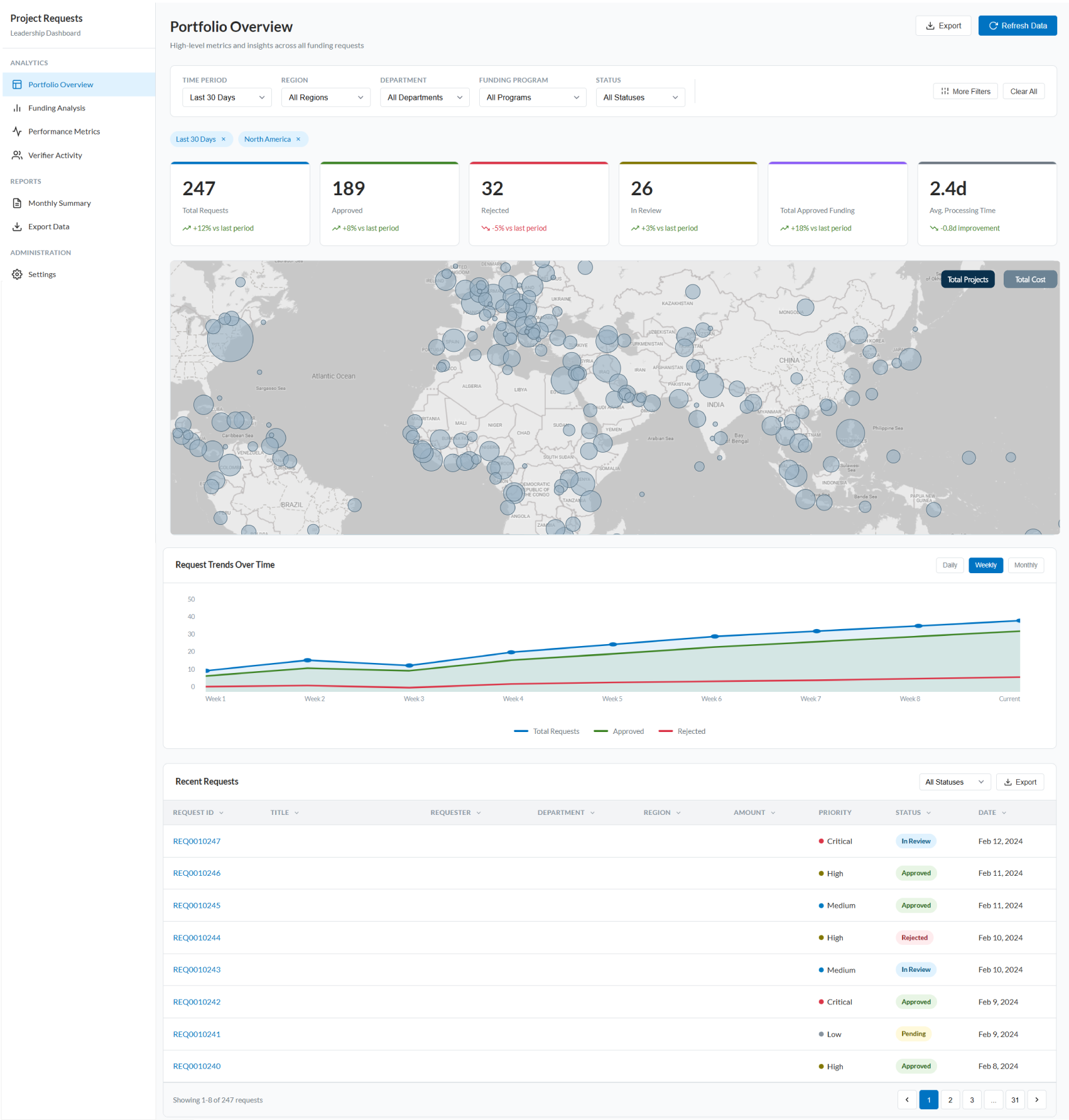
Portfolio-level dashboard | The big picture view that leadership never had before, with filters for every dimension of work.
CHALLENGE
Start Small, Scale Fast
Following lean/agile and human-centered design methodologies, the team met with a diverse range of stakeholders, from senior management, to the business, to customers around the world, to understand their current processes and challenges. To minimize the time to launch, the team designed and developed a small-scale MVP that addressed one business process.
After deploying the MVP, we took the lessons learned to scale up the portal to include many more business processes. This approach allowed us to test the product at a small scale with minimal risk and incrementally scale up. We were able to prove value early and build organizational trust in the tool before asking more teams to adopt it.
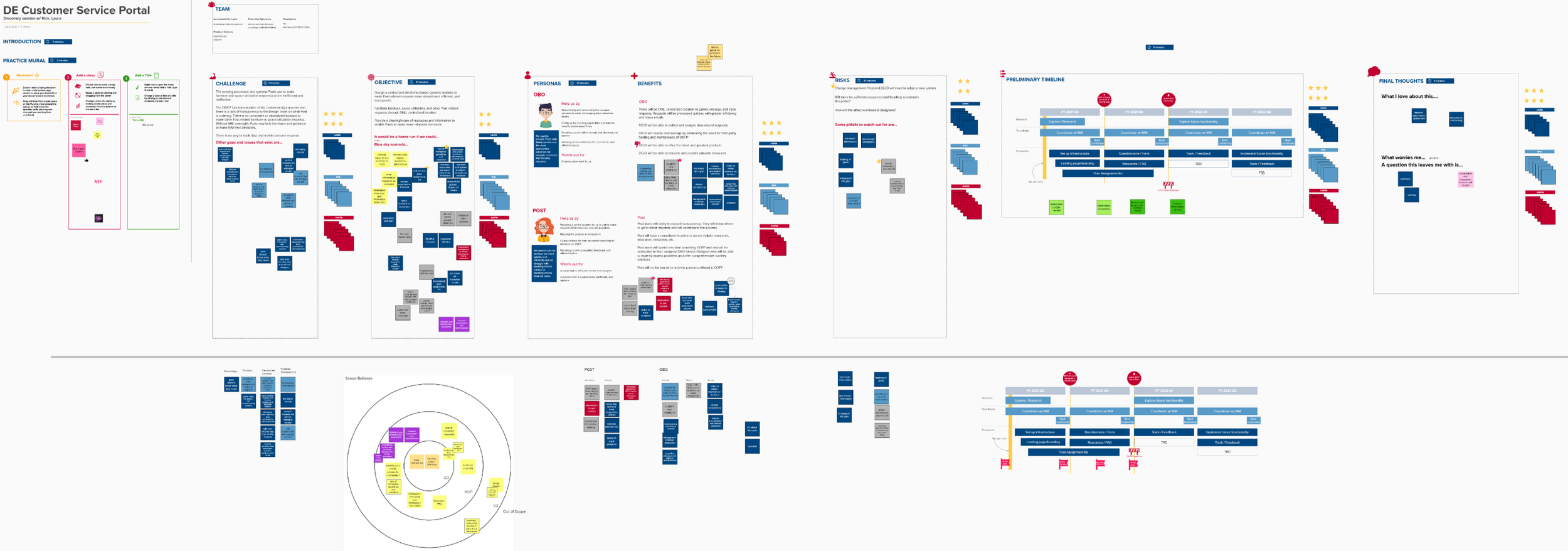
Initial design workshop with leadership to uncover pain points, requirements, and blue-sky scenarios.
APPROACH
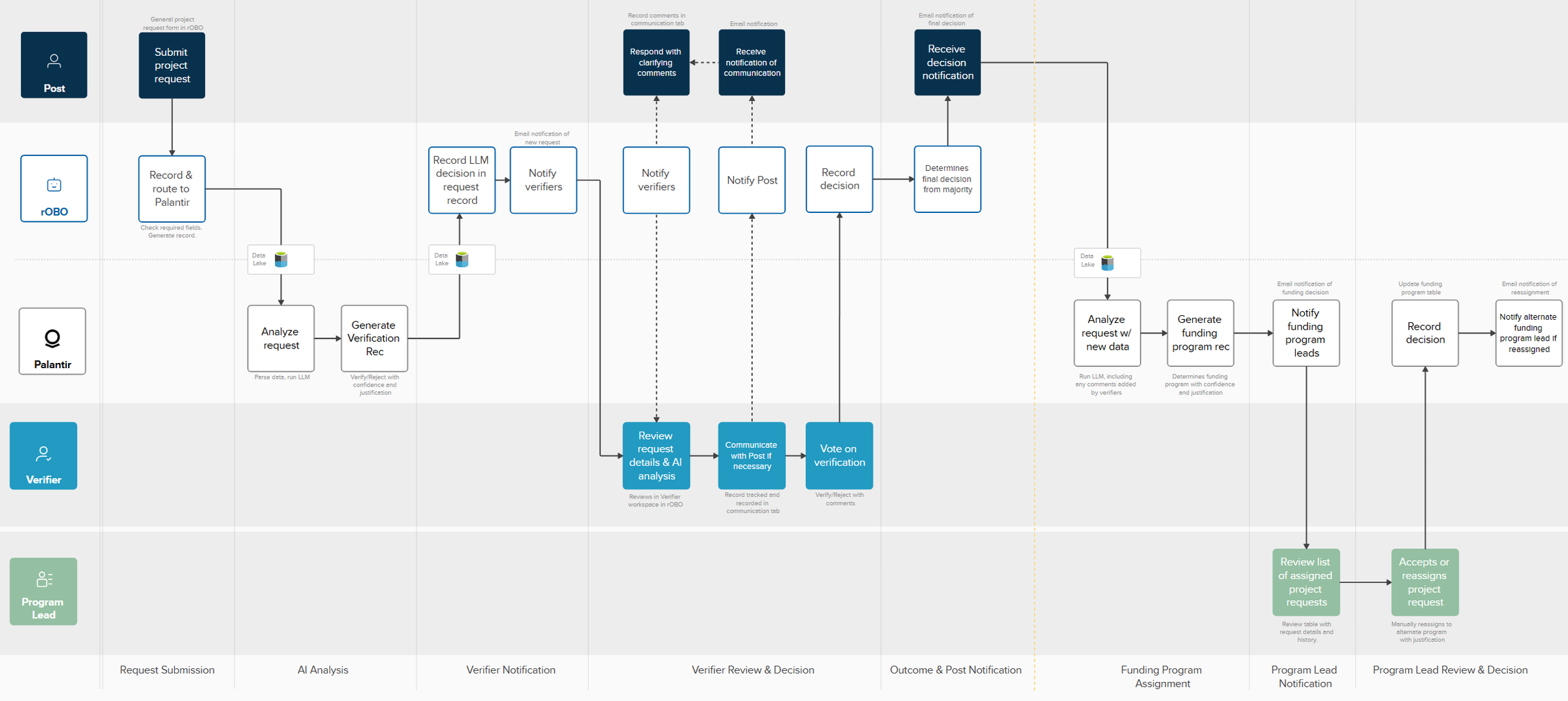
Process map snippet
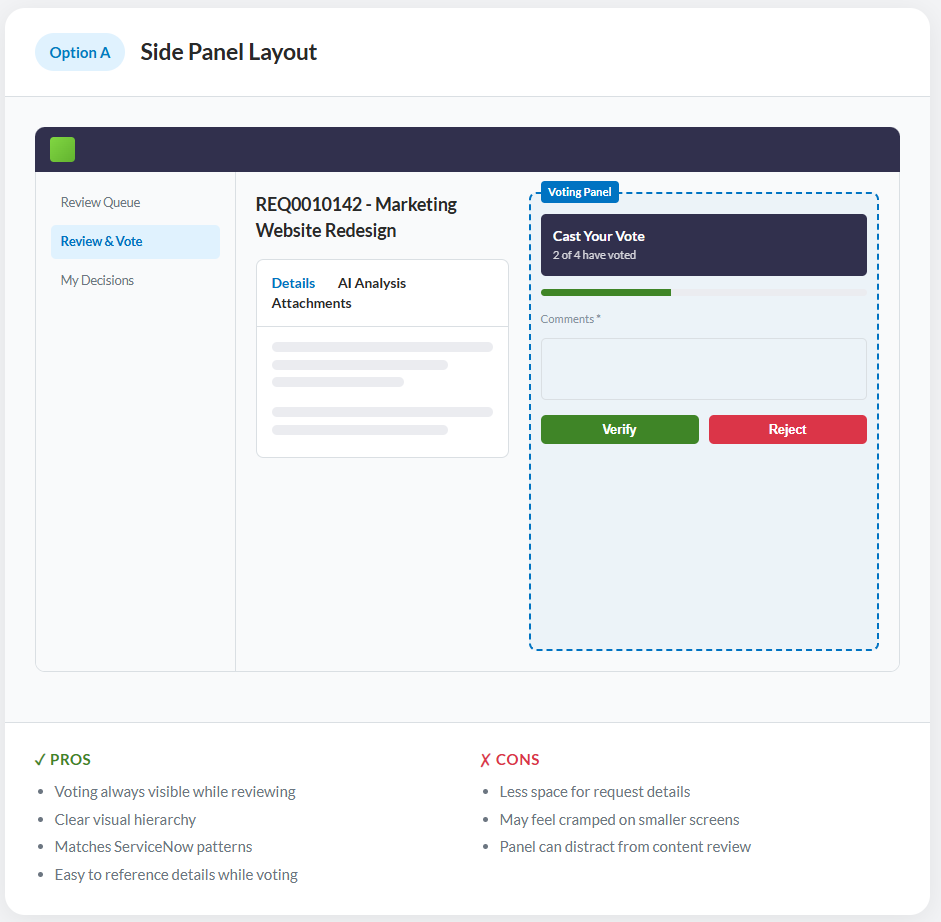
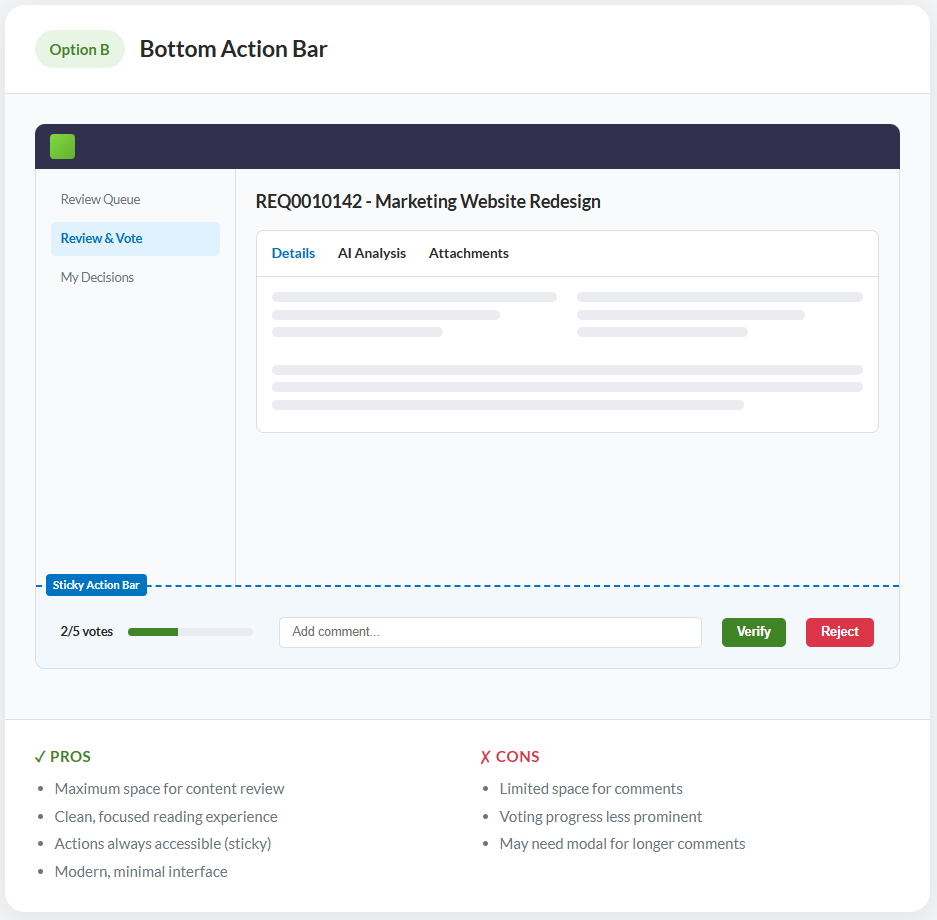
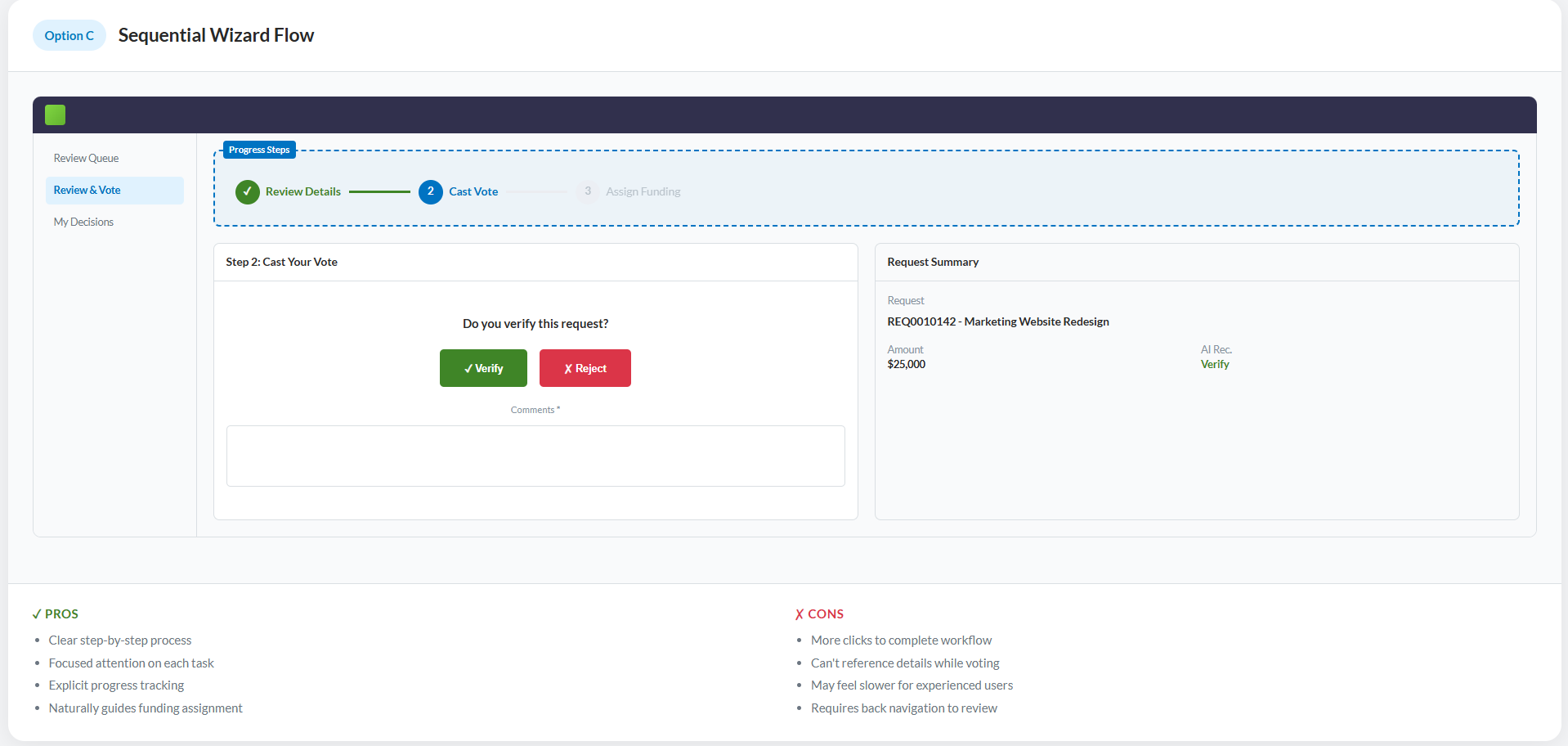
Wireframes of alternative verifier screens | Side panel, bottom action bar, and sequential wizard flow
One Tool, Three Experiences
The Customer Service Portal needed to serve three fundamentally different user groups, each with distinct needs. Global customers needed a one-stop shop to submit requests and track their status. Business teams needed a centralized, streamlined tool to manage a series of interconnected workflows. And leadership needed a transparent, analytical tool to manage resources and understand portfolio performance.

Global Users
A single portal to submit requests and track status — replacing fragmented email-based processes with transparency and accountability.
Built to scale from day one
A primary goal of the Customer Service Portal was to minimize the customization of the tool for each subsequent business process. From the very first iteration of the first module, we were building with modularity and scalability in mind. We designed a solution that worked for 80% of the business use cases, standardized the data fields to the extent possible, and created a consistent and unified user experience.
As we scaled the tool, onboarded more teams and processes, and deployed to more customers, we started from an 80% solution and were able to quickly and efficiently scale. Each new module — whether it was design review, permit processing, or maintenance requests — could be stood up rapidly because the underlying architecture, interaction patterns, and data model were already proven.

AI Review Assistant for Verifiers
The AI review assistant pre-screens submissions against bureau standards, flags potential compliance issues, checks for completeness across required fields, and surfaces similar approved requests as reference — reducing initial review time while keeping human expertise at the center of every decision.
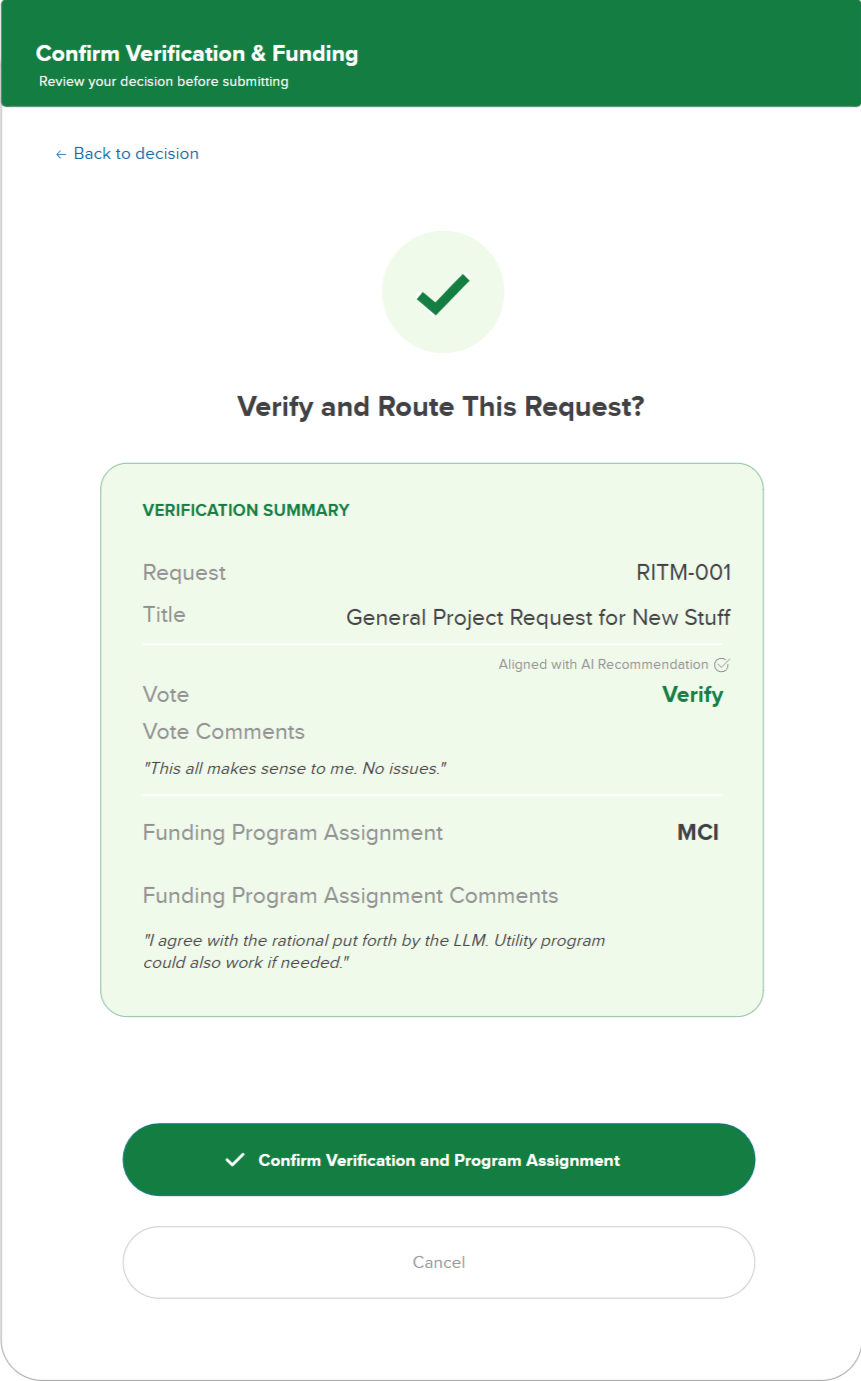
Verifiers receive an AI-generated review summary alongside each submission, highlighting what looks good, what needs attention, and what may require closer examination. They can accept, override, or dismiss any AI suggestion — the tool assists, it never decides.
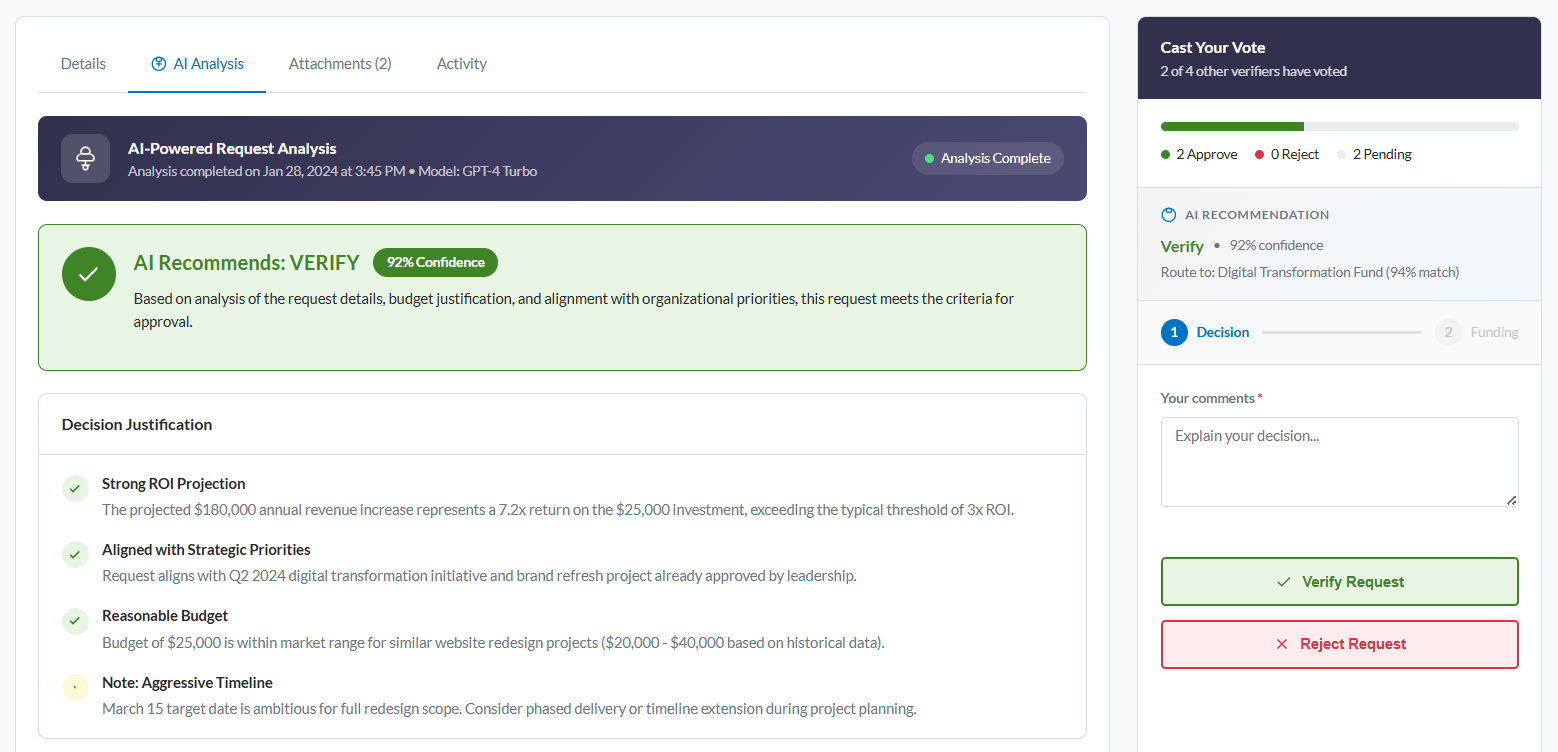
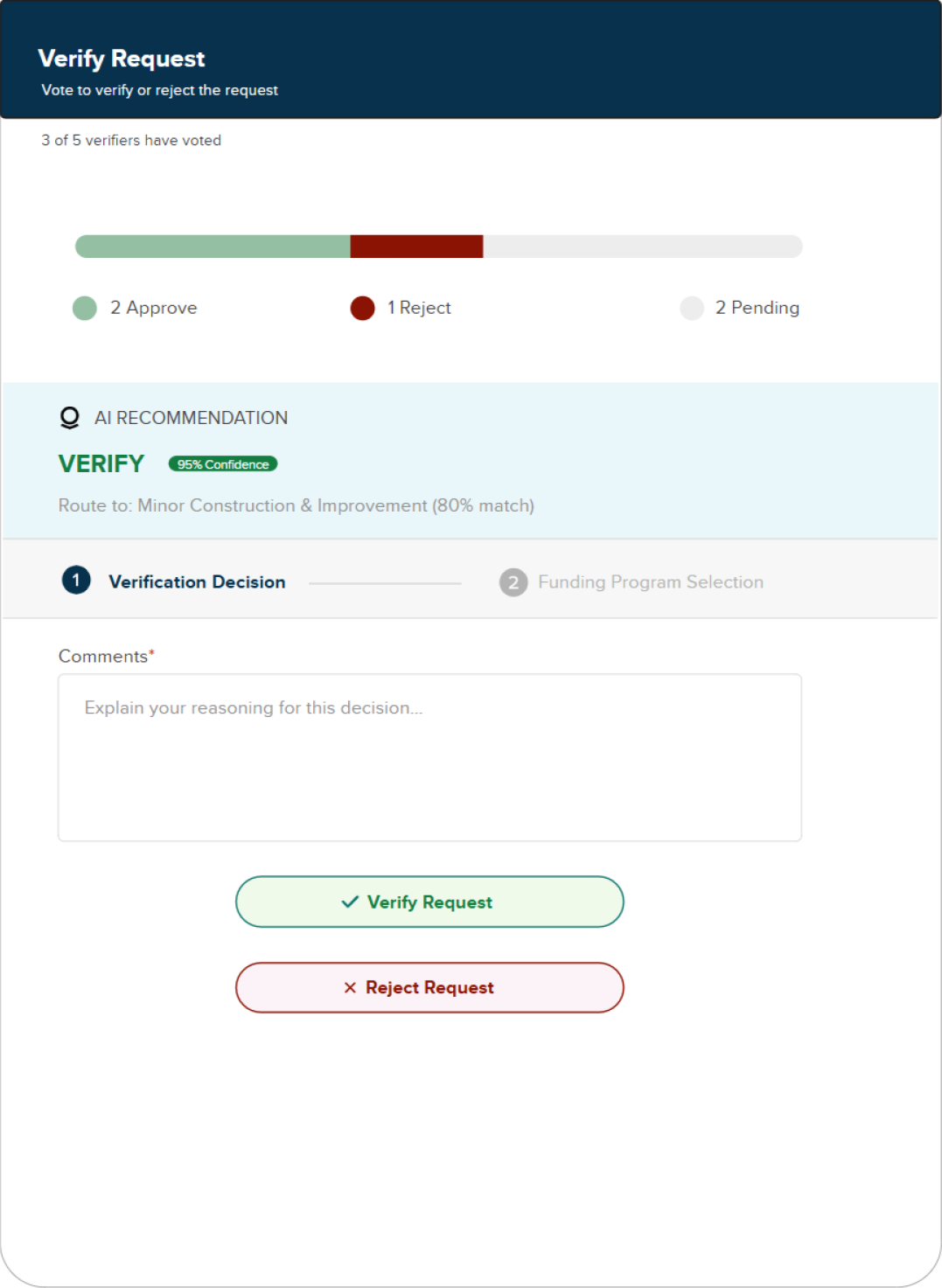
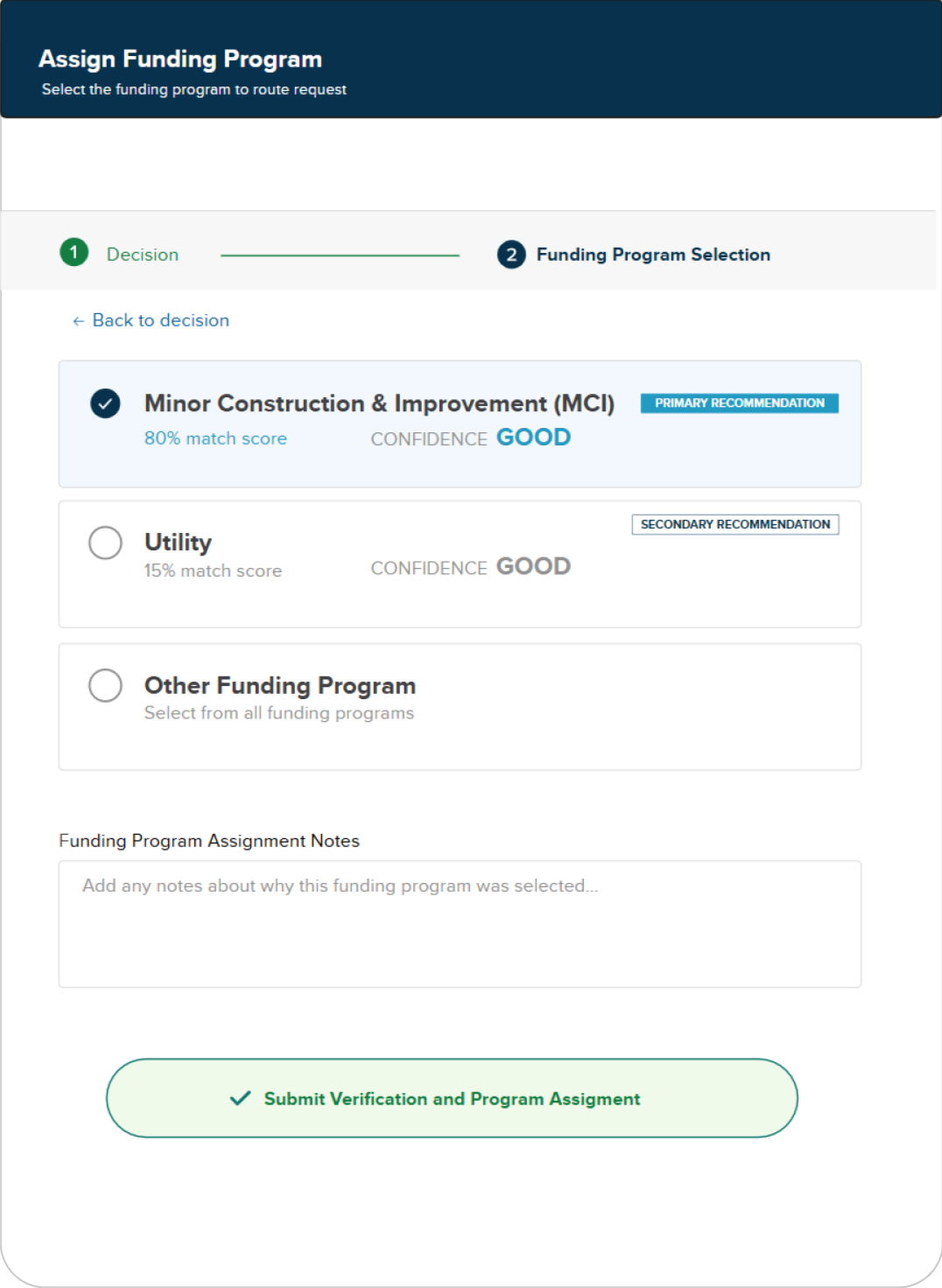
Verifier screens displaying AI recommendations
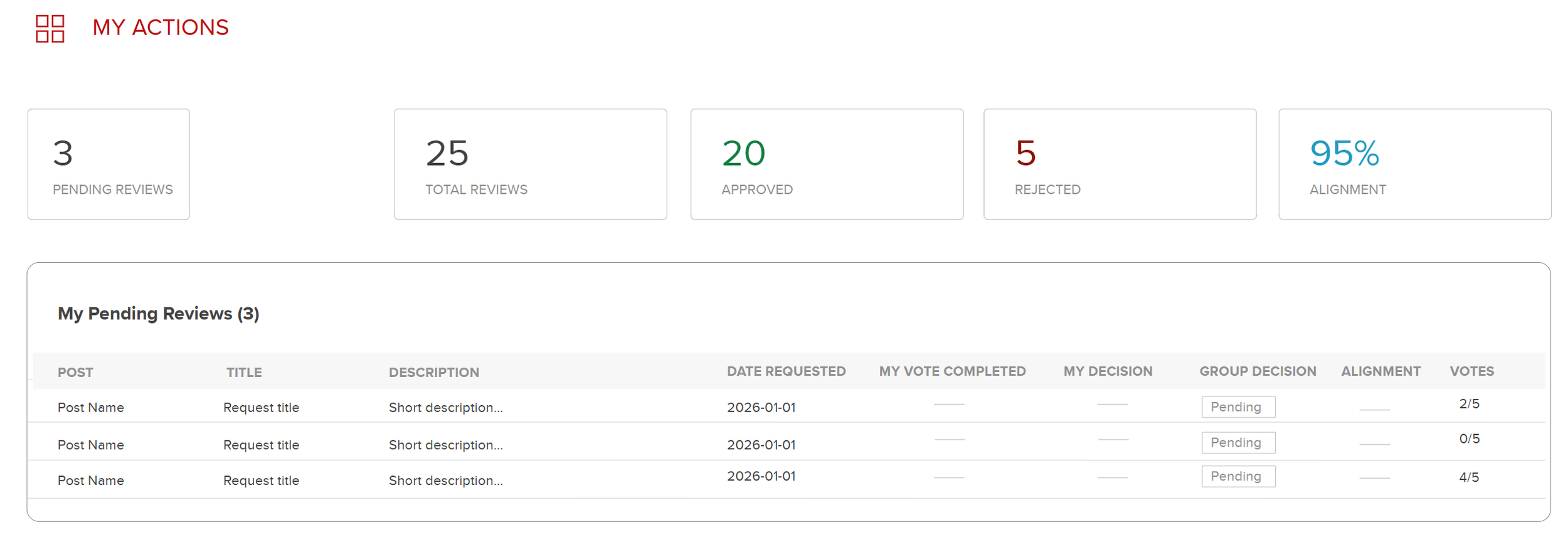
Verifier task list
SOLUTION

Business Teams
Centralized workflow management with standardized handoffs, automated routing, and a consistent process across all business modules.

Leadership
Portfolio-level analytics with real-time dashboards, resource visibility, and the ability to drill down from aggregate metrics to individual requests
Adding Intelligence to the Review Process
As the portal matured and adoption grew, one of the most time-consuming bottlenecks became clear: the verification and review stage. Reviewers across disciplines — structural engineering, architecture, interior design — were spending significant time manually checking submissions for completeness, compliance with standards, and consistency across documents. The process was thorough but slow, and the Bureau's growing volume of requests was straining reviewer capacity.
To address this, I led the design of an AI-assisted review feature that provides intelligent support to verifiers without replacing their judgment. The system pre-screens incoming submissions against established criteria, flags potential issues and inconsistencies, and surfaces relevant precedents from previously approved requests — giving reviewers a head start so they can focus their expertise on the decisions that truly require human assessment.
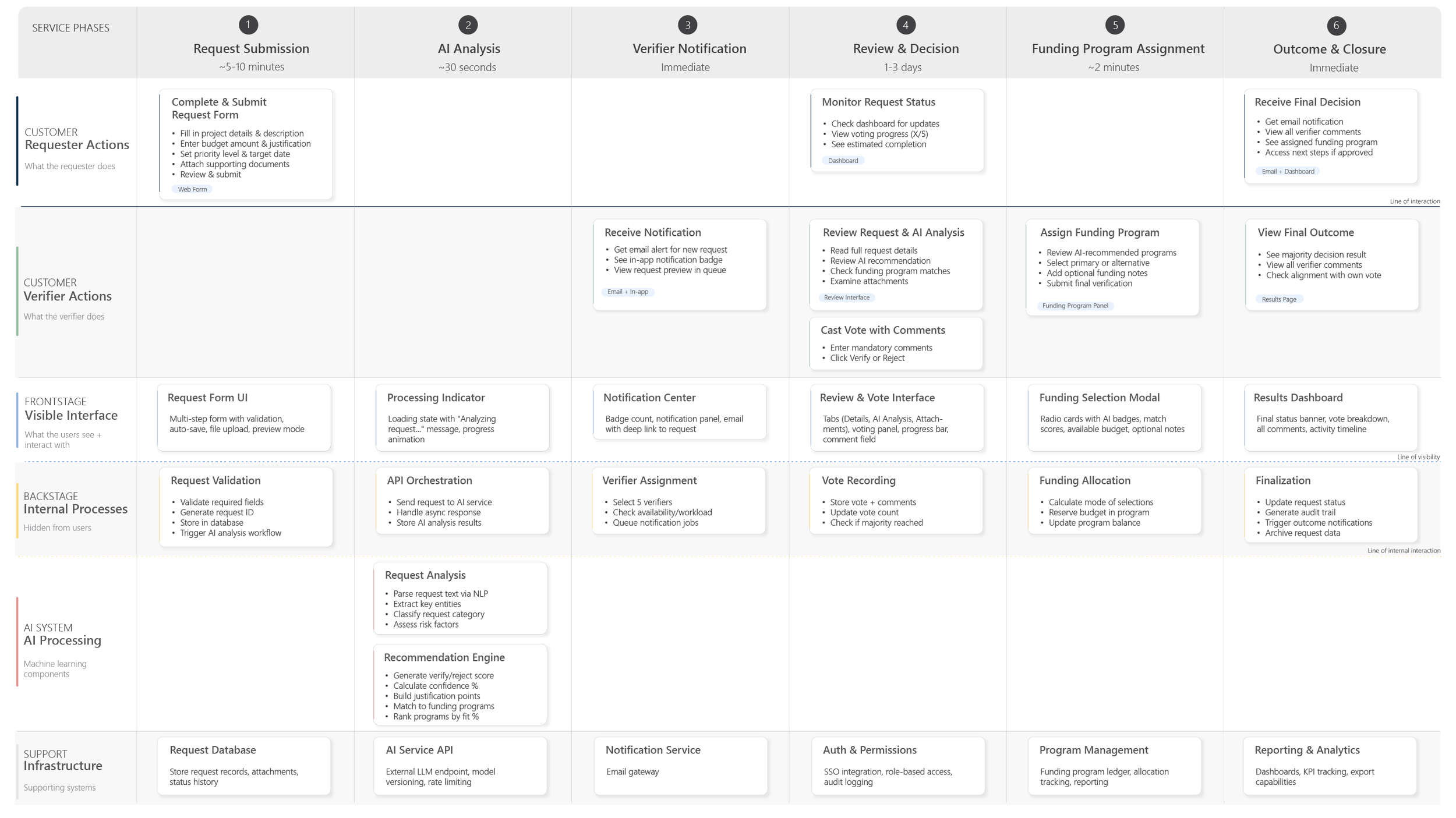
Service blueprint showing process with important front and backstage touchpoints.
A transformative shift
The Customer Service Portal was a transformative way of working for the Bureau and was in part the impetus for a much larger digital transformation effort. Customers who once dreaded their tasks commented on the efficiency and transparency being a breath of fresh air. Business users benefitted from the centralized and standardized way of tracking and managing their workflows. And for the first time, senior leadership had portfolio-level insight into the work and resources.
IMPACT
Back to all work